
1. What is self-management?
Answer:
Self‐management means managing one’s own emotions, behavior and time effectively, and taking responsibility for one’s actions to achieve personal and academic goals. It helps a person stay organized, disciplined and focused.
2. How does self-management help?
Answer:
Self-management helps an individual complete tasks on time, stay confident, face problems calmly, develop self-esteem, make better decisions, and achieve success in personal and professional life.
3. What are self-management skills?
Answer:
Self-management skills include:
- Goal setting
- Time management
- Self-motivation
- Self-awareness
- Stress management
- Maintaining a positive attitude
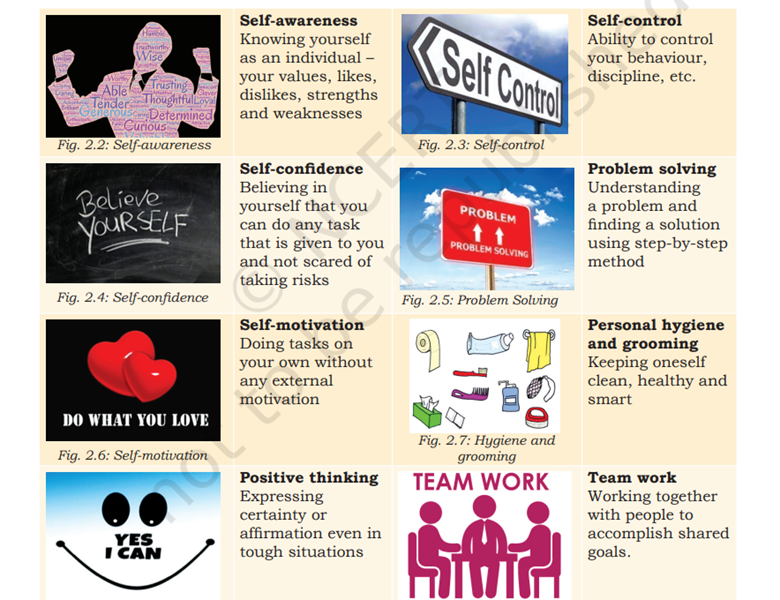
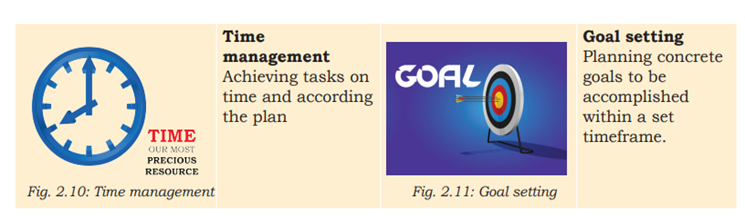
These skills help a person control their actions and remain productive.
4. What is strength–weakness analysis?
Answer:
Strength–weakness analysis is the process of identifying one’s own strengths (what I am good at) and weaknesses (what I need to improve). It helps individuals grow, improve themselves and make better life and career decisions.
5. Difference between Interest and Ability?
Answer:
| Interest | Ability |
| Something we like or enjoy doing | Something we are capable of doing |
| Based on curiosity or passion | Based on skill and competence |
| Example: liking music | Example: ability to play an instrument |
6. What is self-confidence?
Answer:
Self-confidence is the belief in one’s own abilities, decisions and self-worth. It means trusting yourself and your potential to face challenges successfully.
7. What are the qualities of self-confident people?
Answer:
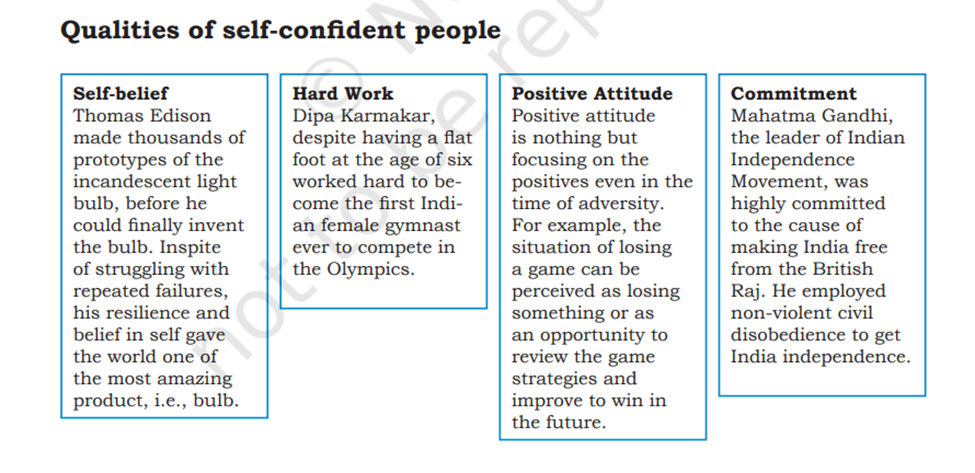
- Think positively
- Communicate clearly
- Accept mistakes and learn
- Take responsibility
- Stay calm under pressure
- Show courage and optimism
- Do not get discouraged easily
8. Steps to build self-confidence
Answer:
Self-confidence can be built by:
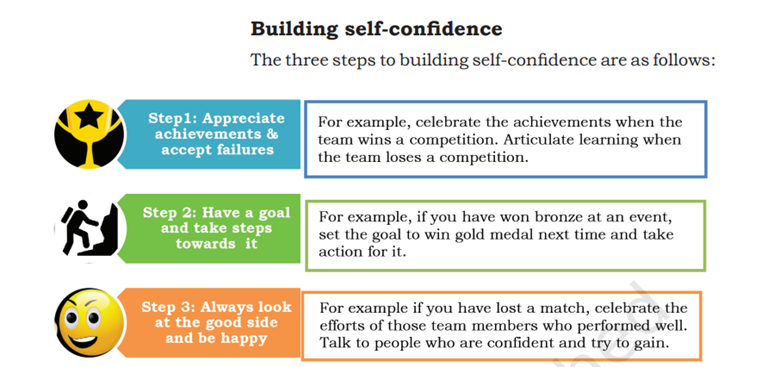
- Setting small achievable goals
- Celebrating small successes
- Thinking positively
- Practicing skills regularly
9. Factors that decrease self-confidence
Answer:
Self-confidence decreases due to:
(a) When we think we cannot do a particular work.
(b) When we keep thinking of our past mistakes and feel bad about it, instead of learning from them.
(c) When we expect to be successful at the first attempt itself and do not try again.
(d) When we are surrounded by people who have a negative attitude, which is reflected in their speech.
10. What is positive thinking and why is it important?
Answer:
Positive thinking means focusing on the bright side of life and believing good things can happen. It is important because it reduces stress, improves mood, increases confidence, strengthens relationships, and leads to better performance and success.
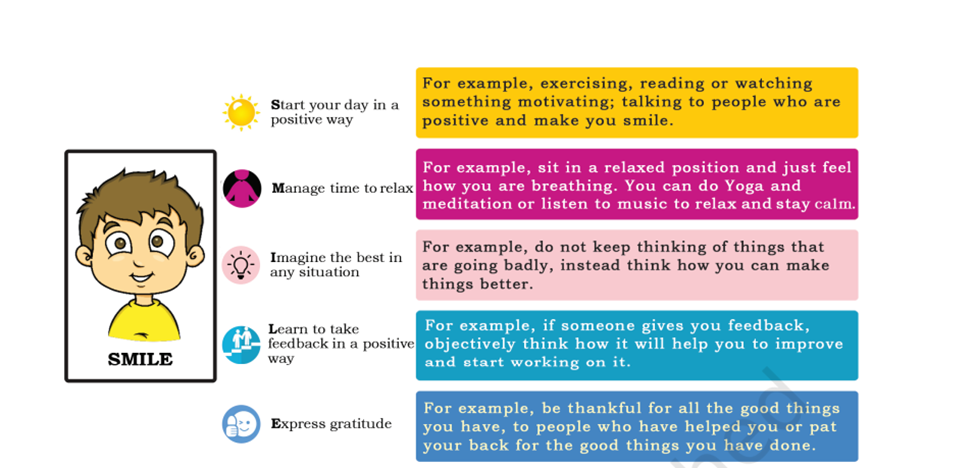
11. What is a smile in respect to positive attitude? Explain.
12. What is personal hygiene and its importance?
Answer:
Personal hygiene refers to keeping the body clean through habits like bathing, brushing teeth, wearing clean clothes etc. It is important because it prevents illness, improves appearance, boosts confidence and makes one socially acceptable and healthy.
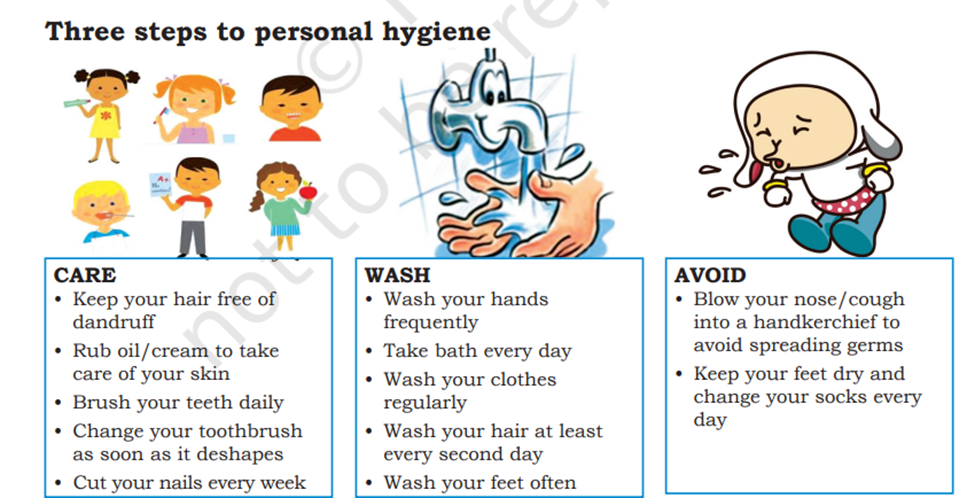
13. What are the three steps of personal hygiene?
14. What is dressing and grooming and what is their importance?
Answer:
Dressing is the action of putting on clothes.
Grooming is the process of making yourself look neat, tidy and smart. The way you dress, and groom can either send the message that you are confident, smart and sincere or possess opposite qualities.
Dressing and grooming are important because they help us
• look smart
• feel confident about ourselves
• make a good impression of ourselves
Importance:
- Creates a good first impression
- Boosts self-confidence
- Shows professionalism and discipline
- Helps in social acceptance and workplace success